
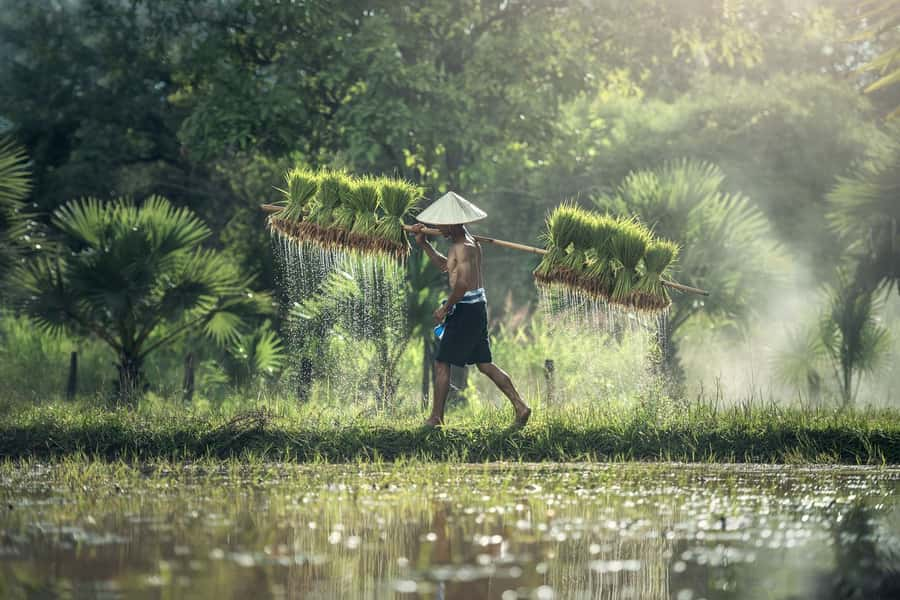
Reviewed · BALI RICE TERRACE TOURS
Bali: Rice Terraces Guided Hiking Experience
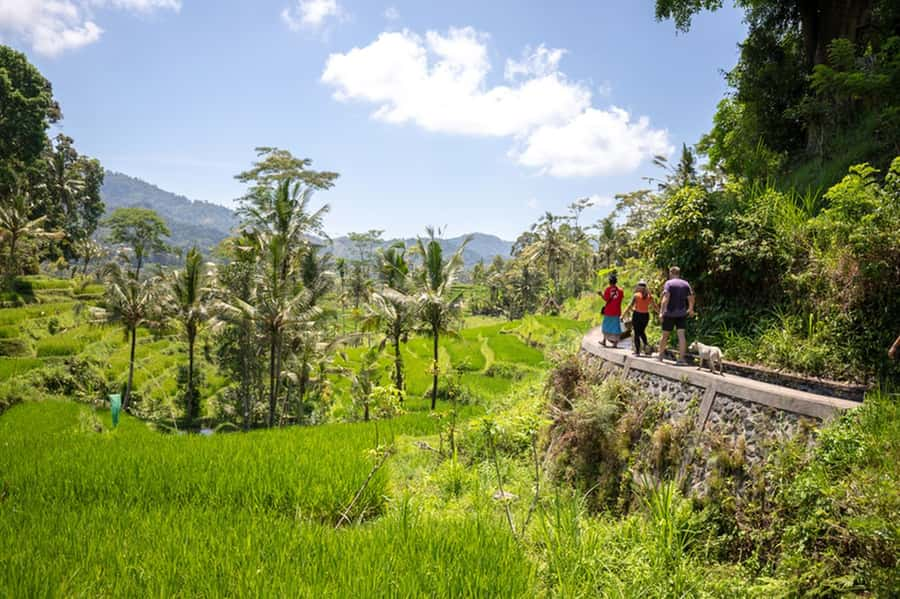
Kerobokan’s rice terraces offer more than a pretty walk: they’re working farms shaped by subak, a centuries-old system that connects irrigation, community life, and temple rituals. On this three-hour tour, you’ll visit a local subak temple, then follow terrace walls and farmers’ bamboo bridges through the fields.
I like two things about this walk: you learn how the farms function, from water management to the crops and wildlife, and the guide brings you to a community temple that’s not usually on a tourist route. A refreshing coconut water or coffee at a small café is a welcome finish.
One consideration: don’t book this expecting a dramatic mountain panorama. The fields are in Kerobokan, where houses surround parts of the route, and the views may feel less remote than the photographs suggest. The walk’s real strength is what you learn along the way.
- Subak in practice: Learn how Bali’s traditional irrigation system distributes water and shapes community life.
- A local agricultural temple: See a place where farmers gather and water priests honor the relationship between people, land, and the gods.
- A working farm, not just a view: Walk 2 to 3 kilometers past crops and learn about the plants and animals supported by the fields.
- A personable local guide: Lena has been praised for clear explanations and a warm approach, though your guide may be someone else.
- A simple post-walk treat: Coconut water or coffee, light snacks, and a traditional udeng or sash are included.
- An eco-minded operator: The tour is carbon neutral and run by a B Corp certified company.
The Walk Begins in Kerobokan
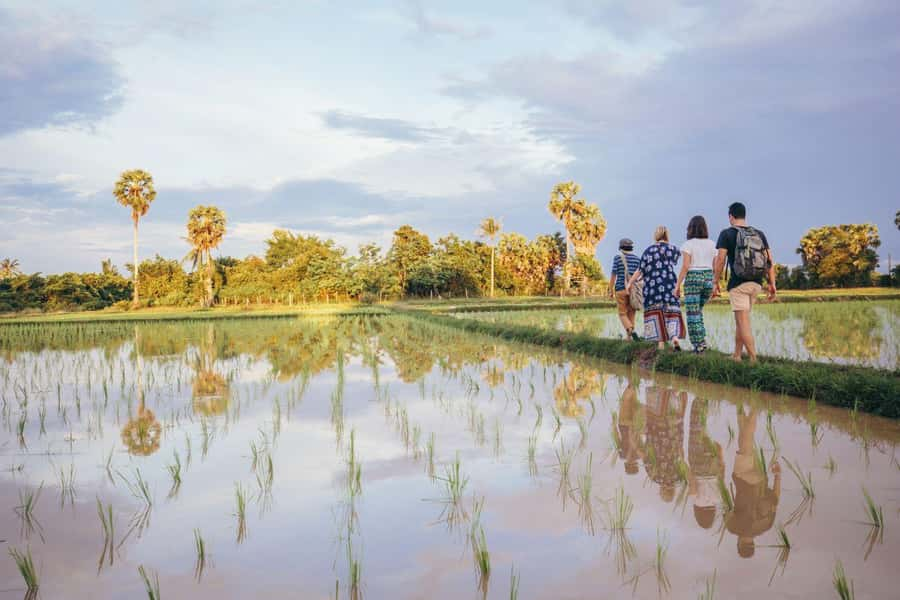
The meeting point is Starbucks Kerobokan, and the tour returns there at the end. From this busy, familiar landmark, the route heads toward rice fields that feel a world apart from Bali’s beach districts, even though the walk stays close to a built-up area.
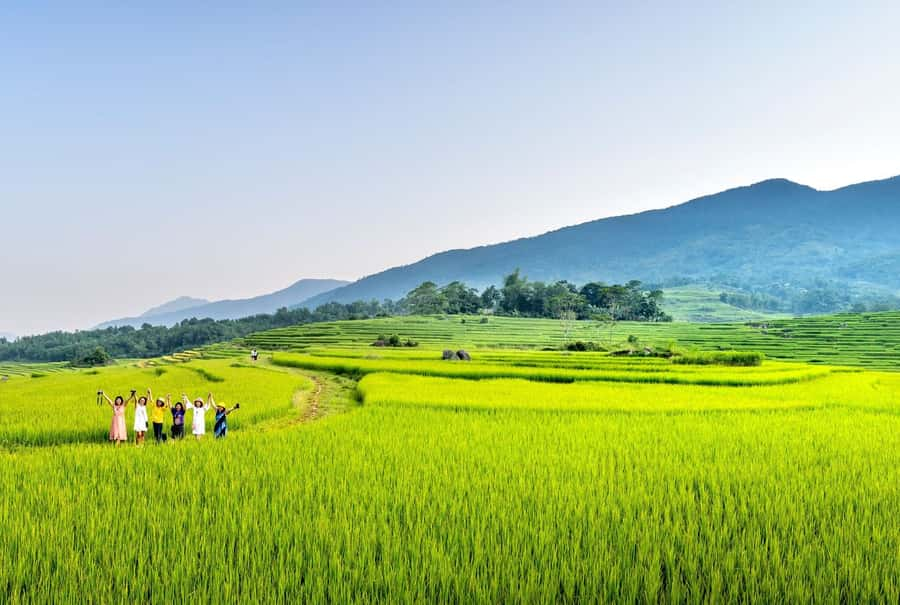
The distinction matters. This is not a remote mountain trek, and you should not expect uninterrupted views of distant peaks. One account of the walk describes houses around the fields and no mountains in sight. If you come for a postcard panorama, you may be disappointed; if you want to understand how farming fits into daily life, you’re in the right place.
The tour lasts about three hours, with a walk of roughly 2 to 3 kilometers through the terraces. You can choose a shared outing or a private one for your own group. The exact start times depend on availability, so check before planning the rest of your day.
Subak: Water, Farming, and Community
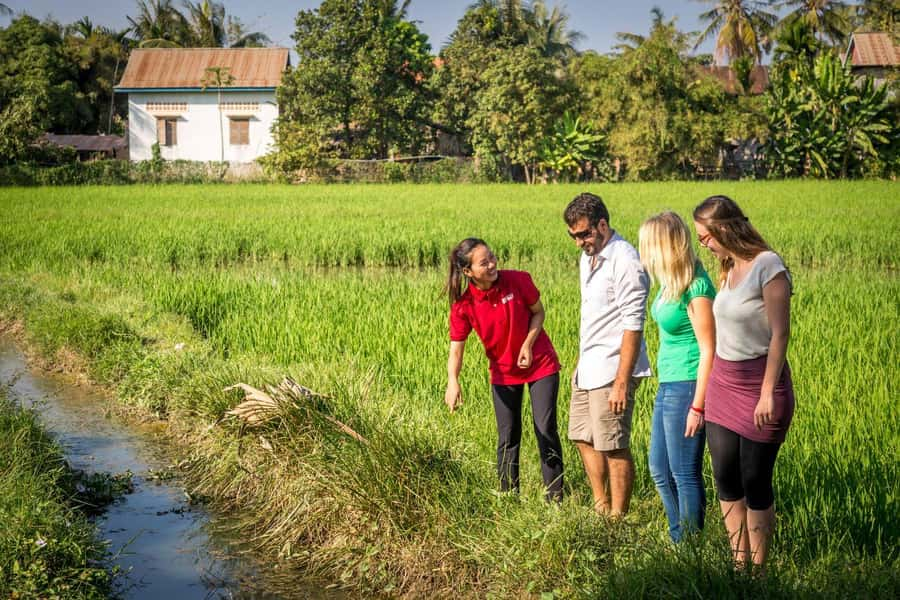
Before the walk through the fields, your guide explains subak, Bali’s traditional irrigation system. It was introduced more than 1,200 years ago and is still used today. Water is not simply routed to crops; its management is bound up with local cooperation and religious practice.
That context changes the way you look at a terrace. The water channels and rice plots are part of a system that depends on farmers working together, not just a scenic pattern on a hillside. You’ll hear how the system supports agriculture and helps create a habitat for living things in and around the fields.
The guide also takes you to a local subak temple, a gathering place for farmers. Water priests honor the relationship between people, the Earth, and the gods at these community temples. It’s a useful stop because it shows that farming here has a spiritual and social dimension as well as a practical one.
The temple is described as a place that most tourists do not visit. That doesn’t mean you should expect an elaborate monument or a formal ceremony. Its appeal is its role in the working community, and your guide’s explanation helps make that role clear.
More rice terrace trips around Denpasar:
- Tanah Lot Tour with Ubud Monkey Forest, Rice Terraces, and Waterfalls
★ 5.0 · 273 reviews - Bali: Jatiluwih UNESCO, Bratan Lake, Iconic Gate & Tanah Lot
★ 4.9 · 132 reviews - Ubud Private Tour: Monkey Forest, Rice Terrace, Temple, Waterfall
★ 5.0 · 96 reviews
Crossing the Rice Terraces on Foot
From the temple, the walk continues into Kerobokan’s rice fields. You’ll use the tops of terrace walls as paths, moving from one plot to another and crossing rivers on farmers’ bamboo bridges. The route is a genuine walk through working farmland, not a paved promenade designed just for sightseeing.
Take care on the narrow paths and bridges, and wear comfortable shoes and clothes. The tour calls for careful footing, especially as you move between fields. No special hiking gear is listed, but shoes that feel secure are a sensible choice.
Along the way, your guide explains what farmers grow besides rice: tomatoes, beans, bananas, eggplant, chilies, corn, and sugar cane. The fields also support aquatic life, including frogs, fish, crabs, and snails. Seeing the farms as an ecosystem, rather than as a single crop, is one of the walk’s most useful lessons.
A particularly strong point of the experience is the agricultural detail. A guide can explain how farm tasks are assigned, how fields are managed, and what role different plants and animals play. The guide Lena has been praised for explaining things clearly, and the local guides are described as friendly. You can’t count on a particular guide by name, but the tour is built around local instruction rather than a self-guided stroll.
Expect Everyday Bali, Not a Mountain View
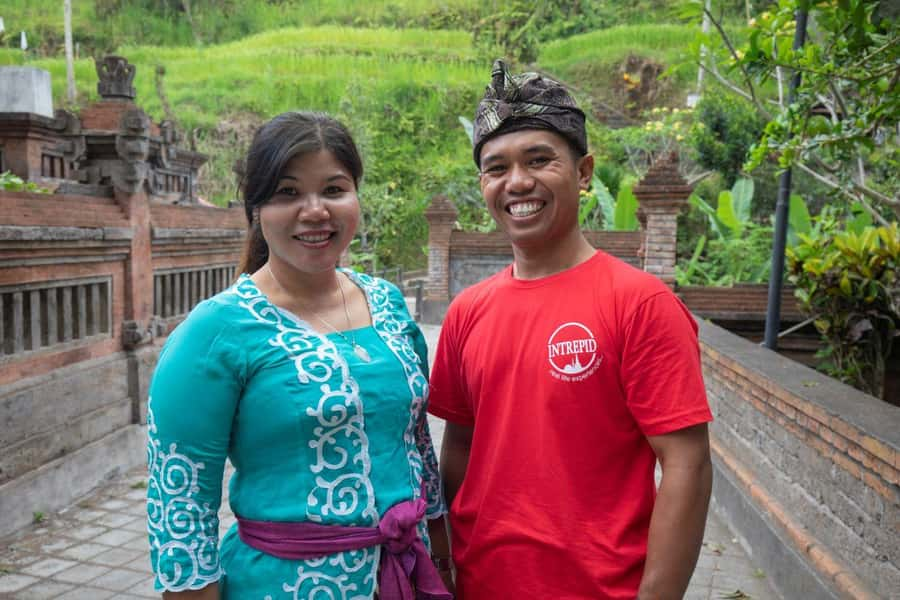
Kerobokan’s location shapes the scenery. Rice fields remain the main attraction, but houses sit around parts of the route. You may find the mix of homes and farmland interesting in its own right: it gives you a glimpse of agriculture close to settled neighborhoods, rather than isolating the fields as a rural showpiece.
Still, it’s wise to keep your expectations in check. Photographs can suggest a more open, mountain-framed setting than you’ll encounter on this walk. If dramatic scenery is your priority, this may not be the best fit. If you’re curious about farm life and the people who maintain the terraces, the setting is less of a drawback.
There is also mention of a possible visit to a local market, but it is not part of the core itinerary described for every tour. Treat it as a possible extra, not a stop to plan around. The temple and rice fields are the reliable focus.
A Café Stop and a Small Local Gift
After the walk, you stop at a small café for either fresh coconut water or coffee, along with light snacks. This is a simple, practical finish after several hours on foot. Additional food and drinks are not included, so order extras only if you want them.
The tour also includes mineral water and a gift of an udeng for men or a sash for women. These traditional items add a local touch, though the main value is still the guide’s explanation of the fields and subak. A rice field donation is included as well, contributing to the places the tour visits.
The activity ends back at Starbucks Kerobokan. No transport is listed as part of the experience, so plan to reach the meeting point yourself. The walk is led in English by a local guide.
More hikes and treks around Denpasar:
- Small Group Mount Batur Sunrise Hike
★ 5.0 · 308 reviews - Private Mount Batur Sunrise Trekking
★ 5.0 · 132 reviews - Mount Batur Sunrise Trekking With AKASA Kintamani Cafe
★ 5.0 · 83 reviews - Mt batur Sunrise Trekking and Natural Spring Tour
★ 5.0 · 62 reviews
Is $39 Good Value?
At $39 per person, this is a fair-value outing if you want context as well as scenery. The price includes a local English-speaking guide, mineral water, coconut water or coffee, light snacks, a traditional clothing gift, and a rice field donation. Most important, you get an explanation of subak and a visit to a local temple that would be hard to make meaningful on your own.
The shared option can suit solo visitors or couples who are happy to join others; the private option gives you the walk with your own group. No group size is specified, so don’t book on the assumption that a shared tour will be small. The three-hour length makes it easier to fit into a Bali itinerary than a full-day excursion.
The price is less compelling if all you want is a scenic photo stop. The walk passes through a lived-in area, and the panorama may not match expectations set by images of far-flung terraces. But if you value conversation with a local guide and details about farming, ecology, and community traditions, the experience offers more than a short look at green fields.
The tour is carbon neutral and operated by a B Corp certified company that aims to use travel as a force for good. That’s a useful point if you’re considering the wider impact of your activities, though it doesn’t replace the need to respect the farmers’ paths and working space during the walk.
Who Should Book This Rice Field Walk?
Book it if you enjoy learning how a place works, like walking on uneven paths, and want to see agriculture up close. The combination of subak, the temple, crops, and wildlife makes the outing a good choice for curious adults who want more than a quick scenic stop.
It may not suit young children: the activity is not recommended for children under six. Nor is it the best pick if you need a smooth, paved route or want a mountain backdrop. The tour involves terrace walls and bamboo bridges, so comfortable shoes and careful steps matter.
You can cancel up to 24 hours in advance for a full refund, and a reserve-now, pay-later option is available. Check the available start times before booking, and leave room in your schedule for the three-hour outing.
FAQ
How long is the rice terrace tour?
The tour lasts about three hours. The walk through the rice fields covers roughly 2 to 3 kilometers.
Where does the tour start and finish?
You meet at Starbucks Kerobokan, and the activity ends back at the same meeting point.
What will I learn about subak?
Your guide explains how Bali’s traditional irrigation system works, why it matters to farming and local culture, and how it supports life in the fields.
Is the tour shared or private?
You can choose a shared tour with other people or a private tour for your own group.
What is included in the price?
The tour includes a local English-speaking guide, mineral water, coconut water or coffee, light snacks, a rice field donation, and an udeng for men or a sash for women.
What should I wear or bring?
Bring comfortable shoes and comfortable clothes. Mineral water is included.
Is the tour suitable for children under six?
No. The activity is listed as not suitable for children under six.
Just added around Denpasar
- Sanur: Horse Riding at the Bali Beach 30 minute ride★ 4.6 · 8 reviews
- Nusa Dua: Museum Pasifika Admission Ticket with Audio Guide★ 4.3 · 4 reviews
- Bali : Full Day Denpasar City Tour★ 5.0 · 3 reviews
- From Bali: Nusa Penida 3 Spots Snorkeling Tour With Guide★ 4.0 · 7 reviews
- Denpasar: Private custom tour with a local guide★ 5.0 · 3 reviews
- Bali/Denpasar: Barong & Kris Dance Show at Tanah Kilap★ 3.7 · 3 reviews
- Bali: Besakih Temple and Sidemen Tour★ 4.6 · 6 reviews
- Bali: Several Iconic Places in Bali That Must be Visited★ 4.7 · 13 reviews
Bali Rice Terrace Tours, compared.
Tanah Lot Tour with Ubud Monkey Forest, Rice Terraces, and Waterfalls
Read our review →
Jatiluwih UNESCO, Bratan Lake, Iconic Gate & Tanah Lot
Read our review →
Ubud Private Tour: Monkey Forest, Rice Terrace, Temple, Waterfall
Read our review →
West Bali: Jatiluwih Rice Terrace and Tanah Lot Sunset Tour
Read our review →
Ancient Temples and Jatiluwih Rice Terrace Private Tour
Read our review →
Ubud Small Group Tour: Monkey Forest, Tegalalang Rice Terraces and more
Read our review →
Ubud Full-Day Private Tour: Waterfall, Temple, Rice Terrace.
Read our review →
Ubud & Canggu: Rice Terrace, Waterfall & Black Sand Beach
Read our review →Browse the lists this tour appears in